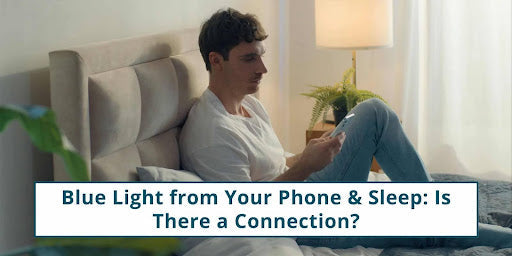
Blue Light from Your Phone & Sleep: Is There a Connection?
The quality of your sleep determines how you feel the next day. If falling asleep feels like a chore, or if you continue to feel alert when you’re supposed to feel sleepy, blue light from your phone might be affecting your health.
It’s about what your phone’s screen can do to your brain and the sleep-wake cycle. In this post, we’ll dive into what blue light from your phone does to your sleep and, more importantly, what you can do to mitigate or even eliminate the side effects.
Let’s dive in.
How Blue Light From Phones Interferes With Sleep
Blue light sits on the high-intensity, short-wavelength part of the visible light spectrum. Your brain uses that wavelength range as a cue that it’s time to stay alert.
In the evening, melatonin should naturally increase to help wind down, but bright blue light from your phone can delay that natural process.
That’s why you might feel awake even when your body is begging you for sleep.
Signs Your Phone’s Blue Light Is Affecting Your Sleep
Trouble Falling Asleep
If you find yourself tossing in bed after using your phone, that’s a classic sign. The problem is that it doesn’t take a lot of blue light exposure to delay your sleep hormone production and keep your brain in “daytime” mode.
Morning Grogginess
A delayed sleep onset, interruptions, and low-quality sleep are some major signs of late-night phone blue light exposure.
The result? You wake up feeling heavy, slow, or mentally foggy because your sleep cycle isn’t natural.
Eye Strain and Digital Fatigue

Blue light from screens tends to refract more inside your eyes, which makes it harder for them to focus. And when you spend several hours trying to focus on a digital screen, your eyes can get strained and fatigued.
Therefore, constantly using screens without proper protection can lead to digital eye strain.
Related Read: Blue Light Glasses for Computers (Top Picks and How They Work)
How To Reduce Blue Light at Night
Night Mode vs Blue Light Filters
Here’s one way to reduce the impact of digital blue light on your eyes: Use your devices in Night Mode.
Most devices have this setting; it makes your screen feel warmer. It might not eliminate blue light wavelengths, but it can reduce the intensity.
You can also use a third-party blue light filtering application like f.lux (On Windows).
Does Lowering Brightness Help?
Lowering brightness reduces intensity, but the blue light wavelengths still reach your eyes. A dim blue light can still affect you. A warmer tone is kinder to your sleep cycle.
Minimizing Blue Light Exposure at Night
Best Blue-Light Glasses for Phone Use
Not all blue light glasses filter the right percentage of blue light to help with sleep. Amber or orange lenses are often the most effective for blocking the problematic wavelength.
If you read or scroll in bed and can’t stop using your phone at night, wear orange, amber, or red blue light-blocking glasses.
Here’s a pair to consider: Nighttime Wayfarer Blue Light Glasses

Blue Light Screen Protectors
A screen protector with a blue light filter adds a layer of defense; however, it won’t block as much as highly-tinted glasses.
Screen protectors are great for computers; they can reduce eye strain and cut some of the harsh lighting.
Pro Tip: Realize that your brain can’t go from scrolling to deep sleep instantly. You may want to keep your screen time at night to a minimum, especially 2 hours before going to bed. This small shift helps your body transition into rest mode faster.
Questions You Might Have
Is Blue Light Always Bad?
Not at all. During the day, blue light improves your alertness, mood, and focus. The issue is nighttime exposure; blue light sends your brain mixed messages, keeping you alert when you’re not supposed to be.
Is Using My Phone in the Dark Worse?
Yes, your pupils widen in the dark, which means more intense light exposure from the screen. An increased stimulation makes it harder to fall asleep.
Can Blue-Light Glasses Fix Insomnia?
They can help with light-triggered sleep delays, but they can’t help medical insomnia or sleep issues related to anxiety, stress, or lifestyle patterns. They can support, but can’t treat a medical issue.
Is a Warm Lamp Better Than Overhead Lights at Night?
Yes, soft, warm lighting tells your brain it’s time to wind down, whereas bright overhead lights mimic daytime and keep you alert.
What’s the Best Time to Wear Blue-Light Glasses?
The best time to wear nighttime blue light glasses would be 1 - 2 hours before bed. That’s when the sleep hormone, melatonin, should naturally rise. Blocking blue light during that window supports your body’s natural sleep cycle.
A Simple Night Routine You Can Start Today
- Turn on Night Mode at sunset or set it to start automatically
- Reduce stimulating content at least an hour before bed
- Put on blue-light glasses if you still need to look at screens
- Dim your room lights and switch to warm tones
- Keep your phone off the bed and out of arm’s reach
Final Thoughts
You don’t need to fear blue light; it’s not all bad. The real issue is timing. When bright, blue light at night is incident on your eyes, it confuses your brain and can push your sleep schedule later.
A few small lifestyle adjustments, including using warmer displays, avoiding using the phone before sleep, and using blue light glasses, can make a huge difference.
Blue light glasses with a dark tint block most of the blue light, so wear them 1 - 2 hours before bed for a sounder sleep.


