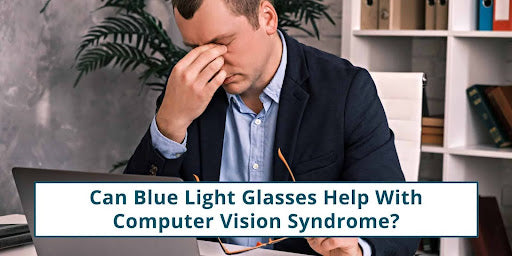
Can Blue Light Glasses Help With Computer Vision Syndrome?
Your eyes aren’t designed for eight hours of screen time every day; the harsh lighting and tiny fonts can put consistent pressure on your eye muscles.
Computer Vision Syndrome (CSV) has become a common side effect of modern work, and most people don’t even realize there’s a name for what they’re experiencing.
There are a few ways to tackle this condition, including wearing blue light glasses with the right tint (Will go over that later).
However, if you really want to understand the issue and thereby solve it effectively, the answer is more nuanced than a simple yes or no.
This guide breaks down what CVS actually is, what the science says about blue light, when glasses help, when they don’t, and how to decide if they’re worth your money.
What Is Computer Vision Syndrome (CVS)?
Computer Vision Syndrome is a group of eye- and vision-related problems that result from prolonged screen use.
According to the American Optometric Association, most people who use a computer for multiple hours a day experience some CVS symptoms.
Common triggers include:
- Extended focus at a fixed distance
- Reduced blinking
- Screen glare and poor contrast
- Improper viewing distance
- Poor posture and lighting
If your job, hobbies, or scrolling habits revolve around screens, CVS is a risk you need to address.
Common Symptoms of Computer Vision Syndrome

Computer Vision Syndrome doesn’t show up the same way for everyone; symptoms can range from mild to severe.
Typical CVS symptoms include:
- Eye strain or fatigue
- Blurred or double vision
- Headaches, especially late in the day
- Dry, itchy, or burning eyes
- Neck, shoulder, or upper back pain
- Difficulty focusing after screen use
If you’ve ever closed your laptop and felt like your eyes needed a nap, that might be CVS saying hello.
What Causes CVS?
Here’s the short version: Screens demand more from your eyes than almost any other routine task. Here are some prominent contributors:
The biggest contributors
- Reduced blinking: Screen use can cut blink rate by up to 60%, which can lead to dryness
- Fixed focus: Your eyes stay locked at one distance for hours, fatiguing the focusing muscles
- Glare and contrast issues: Bright screens and overhead lighting force your eyes to work harder
- Poor ergonomics: Eye strain often starts in the neck and shoulders
- Extended exposure to blue light: This is where the debate begins
The Blue Light Question: What Is It and Why Does It Matter?
Blue light is a part of the visible light spectrum; it’s emitted by our sun (Natural source) and artificial sources like screens and fluorescent lights.
So, why does blue light get so much attention when it comes to eye health? Mainly because it scatters more easily, which may reduce visual contrast.
Plus, it suppresses melatonin, which means your body gets mixed signals even when it’s time to
Research shows that blue light exposure in the evening can significantly disrupt circadian rhythm, your body’s natural clock.
What Science Says About Blue Light and Eye Strain
Here’s the honest answer: blue light is not the sole cause of Computer Vision Syndrome, and current evidence suggests it’s not the primary driver of eye strain.
There’s limited evidence that blue light filtering lenses significantly reduce eye strain compared to clear lenses.
However, blue light glasses do show promise in some scenarios, and the results might vary from case to case. Generally, they improve visual comfort and reduce glare from screens and perceived harshness.
How Blue Light Glasses Work

Blue light glasses filter or reduce the amount of blue wavelengths reaching your eyes; how they do this varies widely.
- Filtering percentage: How much blue light is reduced; it can range from 10% to almost 100%
- Lens tint: Clear vs amber lenses; darker lenses block more blue light but alter color perception
- Anti-reflective coatings: Reduce glare from screens and overhead lighting
Clear lenses are better for daytime work; amber lenses are more effective in the evening, especially for sleep support.
Limitations: When Blue Light Glasses Aren’t Enough
Blue light glasses won’t fix or even help CVS if the real problem is something else.
Glasses alone won’t help if you:
- Never take breaks
- Sit too close or too far from your screen
- Work with poor lighting
- Have uncorrected vision issues
- Suffer from chronic dry eye
Recommended Blue Light Glasses for Computer Vision Syndrome
SleepZM Clear Blue Light Glasses

Best for: All-day computer use
Benefits:
- Filters high-energy blue light without yellow tint, so colors stay accurate for work and design tasks
- Anti-glare lenses reduce visual noise from screens and overhead lighting
- Lightweight frames built for long wear without pressure or fatigue
- Ideal for offices, remote work, and extended screen sessions
SleepZM Amber Night Blue Light Glasses

Best for: Evening use and sleep support
Benefits:
- Strong blue light blocking to support natural melatonin release at night
- Amber lenses provide calm visual stimulation
- Helpful for late-night screen use, TV watching, or scrolling before sleep
- Supports faster wind-down
Questions You Might Have
Do Blue Light Glasses Reduce Eye Strain?
They can reduce eye strain for some people, especially by lowering glare and visual harshness. However, break frequency, posture, and screen brightness often have a bigger impact on CSV symptoms.
Can Blue Light Glasses Improve Sleep?
Yes, particularly when you wear darker lenses (Amber, orange, red) in the evening. Blocking blue light before bed helps protect melatonin production, potentially improving sleep onset and quality.
Are All Blue Light Glasses the Same?
No. The lens quality, filtering accuracy, coatings, and comfort can vary widely. Some glasses barely block any blue light, while others provide comprehensive protection. When buying, always look for published specs.
Should I Get Prescription Blue Light Glasses?
If you already wear prescription glasses, an optometrist can recommend (And install) appropriate blue light filtering based on your needs and screen habits.
Final Thoughts
Here’s the bottom line: Wearing blue light-blocking glasses consistently and at the right time can help with computer vision syndrome. But it can’t cure the condition, mainly because blue light exposure isn’t the only cause; there are other factors at play.
So think of them as a support tool and couple them with better screen habits, proper lighting, regular breaks, and eye care. And if you spend multiple hours behind a screen, all that isn’t optional; it’s maintenance for modern eyes.
Read More: Understand The Science Behind Blue Light Glasses and How Sleepzm Glasses Help


%20has%20become%20a%20c...)