

Short answer: the best blue light blocking glasses for sleep have an orange or red lens that filters almost all blue light, not a clear one. Our standard pick is the SleepAid orange lens (99% blocked across 380–550nm). For the strongest filter, choose SleepAidMax red (99.7% across 380–580nm). Wear them for the last two to three hours before bed, and never drive in them.
What Makes a Good Pair of Sleep Glasses?
Light in the evening, blue light especially, can delay melatonin, the hormone that helps signal it's time to sleep. The eye's light sensors that set your body clock respond most strongly to blue light, around 480nm. So a lens for sleep has to cover the whole blue range, not just part of it. Clear "computer" lenses let most of it through, which is why they're for daytime.
What to look for:
- A measured figure across the full blue range, ideally reaching into green (to 550nm or beyond), from a named lab.
- An orange or red tint. A lens can't filter nearly all blue light and still look clear.
- A frame that fits well and doesn't let much light in around the edges.
- A style that works with your glasses if you wear a prescription: a clip-on or a fit-over pair.
Our 5 Best Blue Light Blocking Glasses for Sleep
All five use one of our two sleep lenses. Figures are measured by Micro-Light Optics, and both lenses are UV400.
| Lens | Tint | Blue light blocked | Light let through (VLT) | Best for |
|---|---|---|---|---|
| SleepAid | Orange | 99% (380–550nm) | 48% | The evening wind-down, reading, TV |
| SleepAidMax | Red | 99.7% (380–580nm) | 22% | The last hour or two before sleep |
1. SleepAid Orange Wayfarer – Black (best all-rounder)
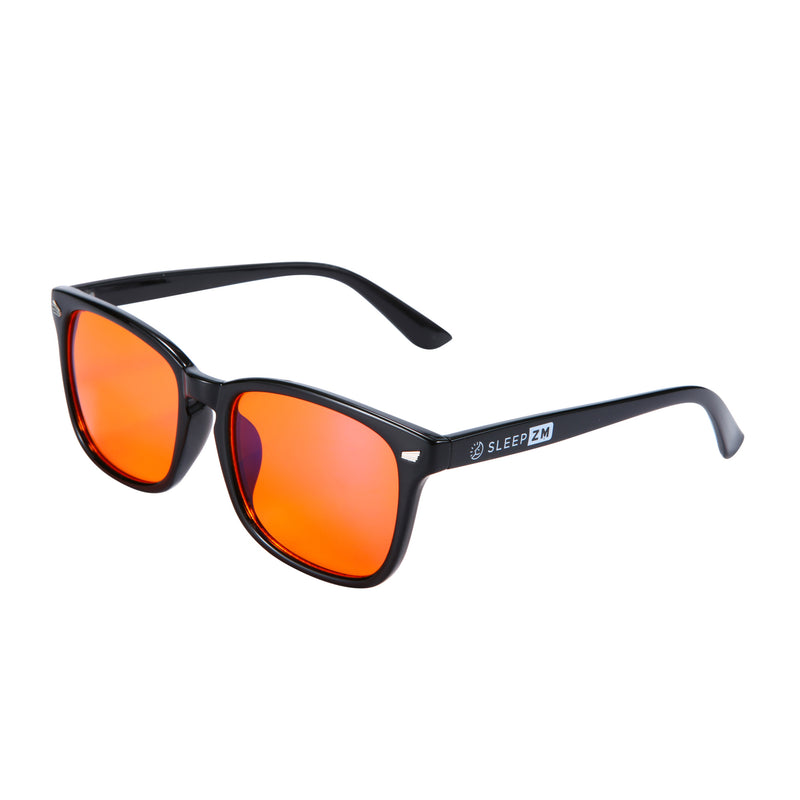
A classic Wayfarer frame with our standard sleep lens. The orange tint keeps enough light for reading, watching TV or moving around the house in the evening.
- 99% of blue light blocked, 380–550nm
- 48% light transmission (Category 1)
- UV400; not for driving
See the SleepAid Orange Wayfarer
2. SleepAidMax Red Wayfarer – Black (strongest filter)
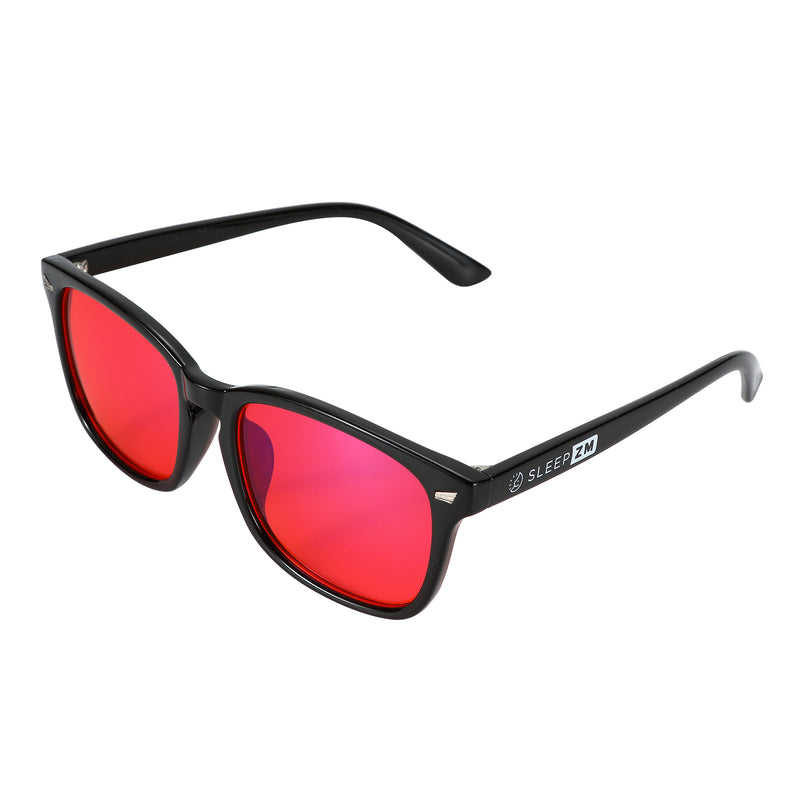
Our strongest lens. The red tint filters blue and most green light, so it's best kept for the final stretch before bed, when you don't need to see much.
- 99.7% blocked, 380–580nm
- 22% light transmission (Category 2), so rooms look dim and red
- UV400; not for driving
See the SleepAidMax Red Wayfarer
3. SleepAid Orange Fit Over – Black (over prescription glasses)
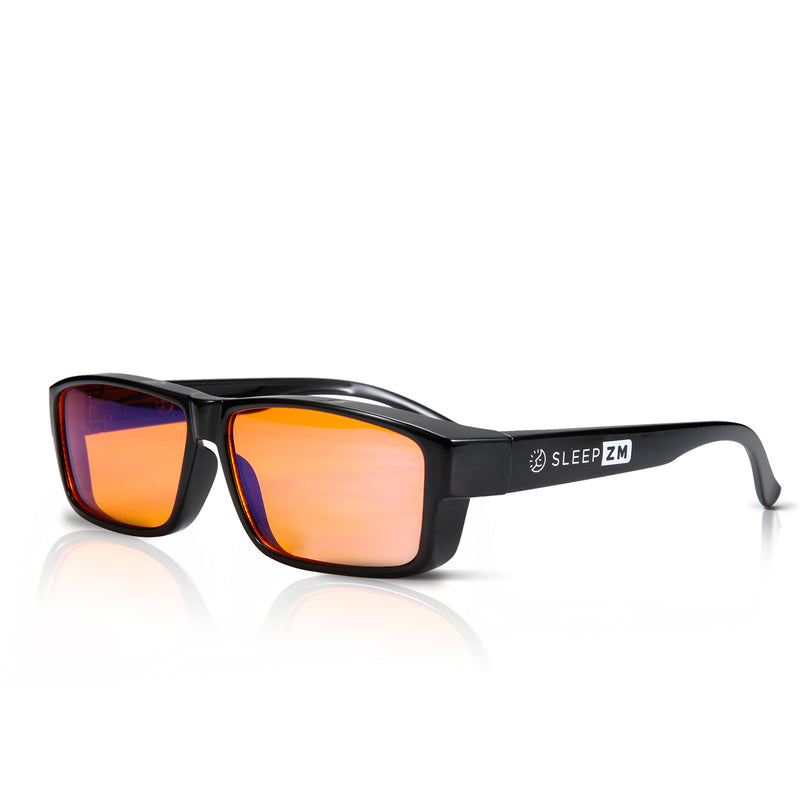
Made to be worn over your own glasses, so you keep your prescription and add the sleep lens on top.
- Same SleepAid lens: 99% blocked, 380–550nm
- 48% light transmission (Category 1)
- UV400; not for driving
See the SleepAid Orange Fit Over or all fit-over styles.
4. SleepAidMax Red Clip-On (lightest option for glasses wearers)
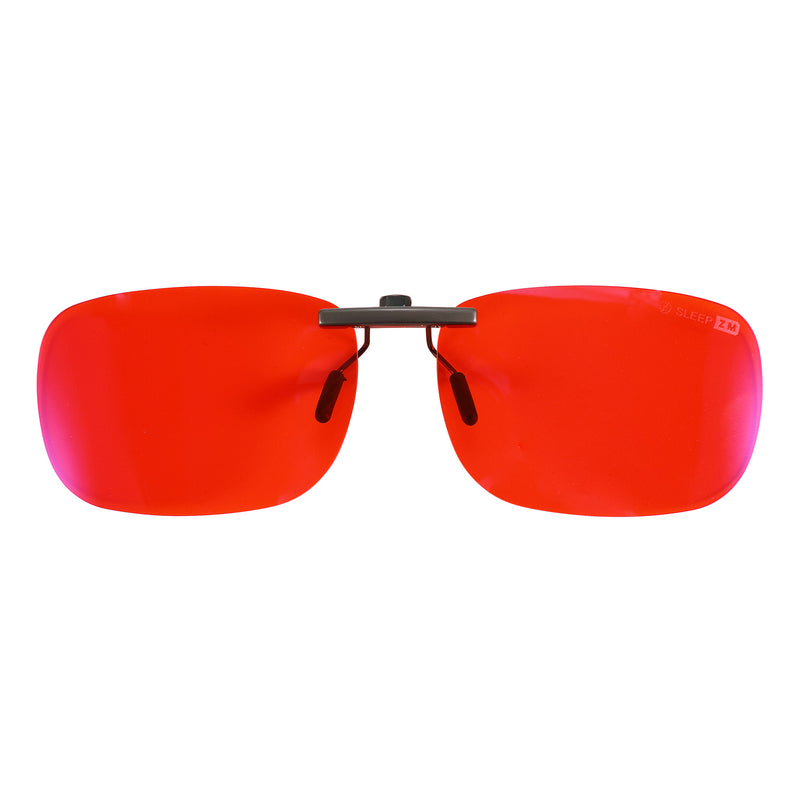
Clips onto your existing frames, so there's no second pair on your face. Good if you already wear glasses in the evening and want the strongest filter.
- SleepAidMax lens: 99.7% blocked, 380–580nm
- 22% light transmission (Category 2)
- UV400; not for driving
See the SleepAidMax Red Clip-On or all clip-on styles.
5. SleepAid Orange Wayfarer – Crystal (clear frame)
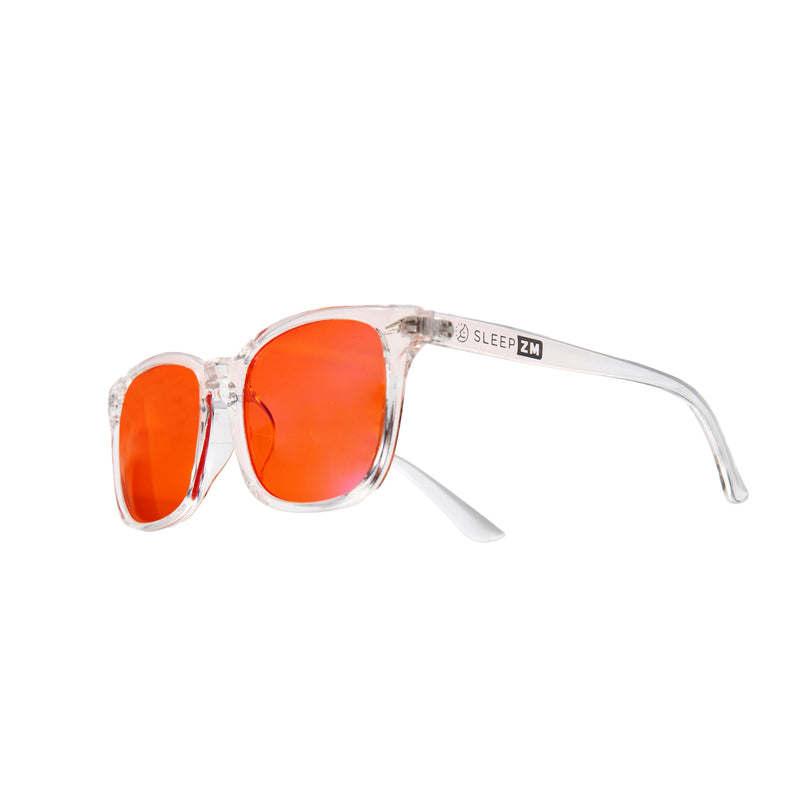
The same SleepAid lens in a transparent frame, for anyone who'd rather not wear black.
- 99% blocked, 380–550nm
- 48% light transmission (Category 1)
- UV400; not for driving
See the SleepAid Orange Wayfarer – Crystal
See every frame in SleepAid orange and SleepAidMax red.
Orange or Red: Which Should You Choose?
- Choose orange (SleepAid) if you'll wear them for a few hours in the evening and still want to read, cook or watch TV comfortably.
- Choose red (SleepAidMax) if you want the strongest filter and will mostly wear them in the last hour or two before bed.
- Not sure? Start with orange. Our Lens Finder can help.
What the Research Says
The evidence is promising but not settled:
- In a 2017 study in Ophthalmic & Physiological Optics, 22 adults wore blue-blocking glasses for three hours before bed for two weeks. Their nighttime melatonin rose by about 58%.
- A small 2018 trial in the Journal of Psychiatric Research gave 14 adults with insomnia symptoms amber glasses to wear for two hours before bed for a week. They reported modest sleep improvements compared with clear lenses.
- A 2023 Cochrane review judged the evidence on blue light filtering lenses and sleep as uncertain, mostly because the studies are small.
So think of sleep glasses as one part of an evening routine, not a sleep treatment. If you have ongoing trouble sleeping, talk to your doctor. For more, see blue light glasses before bed and our lens science and lab data.
How to Get the Most From Them
- Put them on two to three hours before bed and keep them on until lights out.
- Dim the lights at home in the evening too.
- Keep a regular bedtime and wake time.
- Get bright light in the morning, which helps set your body clock.
- Never drive in orange or red lenses. They let through too little light.
Frequently Asked Questions
Do clear blue light glasses help you sleep?
Not much. A clear lens like our InvisiAid blocks 35% of blue light, which is fine for daytime screens but lets most blue light through in the evening. For sleep, choose orange or red.
When should I put on blue light glasses before bed?
Two to three hours before bed is what most studies used. Keep them on until you turn the lights out.
Can I wear sleep glasses while watching TV?
Yes. Everything will look warmer and dimmer, but you can watch comfortably, especially with orange lenses. See blue light glasses for TV.
Are orange or red lenses safe to wear every night?
Yes, for wearing at home in the evening. Take them off before driving, and don't wear them for tasks where you need to see colors accurately.
Do I need special sleep glasses if I wear prescription glasses?
No. A fit-over pair or a clip-on works with the glasses you already have.
The Bottom Line
For sleep, the lens matters more than the frame: choose orange or red, wear it for the last two to three hours before bed, and pair it with dimmer lights and a regular bedtime. SleepAid is our standard pick; SleepAidMax is the strongest.


